
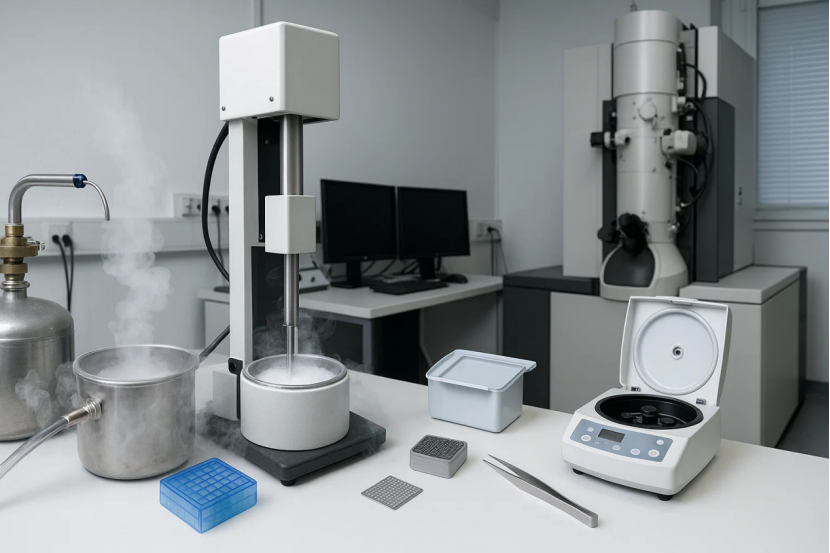
Understanding the intricate world of biology often requires delving into the structural details of its key players. Among the most challenging, yet critically important, are membrane proteins. These proteins are embedded within cellular membranes, playing vital roles in cell communication, transport of substances, and energy conversion. Deciphering their precise three-dimensional (3D) structures is fundamental for comprehending cellular functions and developing new therapeutic drugs. However, studying membrane protein structure presents significant hurdles for traditional structural biology techniques.
What Makes Membrane Proteins So Challenging?
Membrane proteins reside within the lipid bilayer of cell membranes. Extracting and purifying them in a stable, functional form is notoriously difficult. Unlike soluble proteins, membrane proteins require a lipid-like environment (often provided by detergents or nanodiscs) to maintain their structural integrity outside the cell. This makes traditional methods like X-ray crystallography, which typically requires proteins to be formed into highly ordered crystals, particularly challenging or even impossible for many membrane proteins. Obtaining suitable crystals of membrane protein structures is often a bottleneck in the research process.
Furthermore, membrane proteins are dynamic molecules, often undergoing conformational changes as they perform their functions. Capturing these different functional states using techniques that require static, crystalline structures can be very difficult. The inherent flexibility and heterogeneity of membrane protein samples pose significant challenges for structural analysis.
The Rise of Cryo-EM in Resolving Membrane Protein Structures
Fortunately, the field of structural biology has been revolutionized by the advent of cryogenic electron microscopy, or Cryo-EM. This powerful technique allows researchers to visualize biological molecules in a near-native, frozen-hydrated state, bypassing the need for crystallization. Among the various Cryo-EM approaches, Single Particle Analysis (SPA) has emerged as a particularly effective method for determining the high-resolution 3D structures of large, complex, and often conformationally heterogeneous samples, including membrane proteins.
Cryo-EM SPA works by imaging a large number of individual protein particles frozen in a thin layer of ice. Sophisticated computer algorithms are then used to process these 2D images and computationally reconstruct a high-resolution 3D structural model. This approach is especially valuable for uncovering the 3D structure of proteins that are difficult to crystallize.
The advantages of using Cryo-EM SPA for studying membrane protein structure are numerous:
· It maintains samples in a state close to their native environment.
· It can capture multiple conformational states, providing insights into dynamic processes.
· It often requires only a small amount of sample compared to crystallography.
· It is capable of determining the structure of complex protein assemblies.
Given the difficulties associated with crystallizing many membrane proteins, Cryo-EM, and specifically SPA, provides a crucial alternative pathway to obtaining high-resolution structural information. This has opened up new avenues for research into the fundamental mechanisms of membrane proteins and accelerated the development of drugs targeting them.
ShuimuBio: Expertise in Cryo-EM for Membrane Protein Structure Analysis
Leading the way in applying Cryo-EM technology for biological research and drug discovery, particularly in the challenging field of membrane proteins, is ShuimuBio. Founded in 2017 within Tsinghua University, ShuimuBio boasts a core team of accomplished life and computational scientists, as well as experts from IT and the pharmaceutical industry. The company is recognized as Asia's first commercial platform offering Cryo-EM structure analysis services.
ShuimuBio's Cryo-EM center is staffed by highly experienced Cryo-EM scientists. Leveraging the deep scientific and technical foundation in structural biology from Tsinghua University, they have established advanced and reliable workflows for both experimental procedures and data analysis. A dedicated team of technical engineers is responsible for the daily operation, inspection, and maintenance of the Cryo-EM facilities, ensuring optimal performance for data collection. To better address the needs of structure analysis, ShuimuBio has also established a comprehensive protein expression and purification platform, covering molecular cloning, protein expression, purification, and protein characterization. This integrated approach minimizes potential issues with protein samples during transport and utilizes standardized, automated engineering techniques to overcome the challenges of preparing difficult-to-express proteins, including membrane proteins.
ShuimuBio operates one of the largest commercial Cryo-EM platforms globally. Their facilities include 300 kV Cryo-EM microscopes located in Beijing and Hangzhou. They are equipped with 8 electron microscopes, specifically noting 2 units in Beijing and 6 units in Hangzhou using 300 KV Cryo-EM. These facilities are designed for high-quality structure analysis and are equipped with top-tier microscopes and cutting-edge computing platforms. The platform undergoes regular high-frequency maintenance to ensure equipment is in optimal condition, boasting an annual availability exceeding 330 days per microscope and a fault-free operation rate greater than 97%.
Their extensive experience includes over 400 Cryo-EM projects, with more than 200 specifically being Cryo-EM projects. They have successfully resolved over 150 protein structures, achieving a best resolution of 1.8 Angstroms and even a breakthrough resolution of 1.4 Angstroms in some cases. They have successfully tackled structures as small as 51kDa. Notably, over 300 proteins have been resolved with excellent resolution below 3.5 Angstroms, and they have completed over 300 single particle projects, demonstrating broad capability across diverse structures.
A key aspect of ShuimuBio's platform is its AI-driven approach. They have independently developed the SMART software series, which utilizes AI technology to streamline Cryo-EM data analysis and improve efficiency. This software helps reduce machine runtime and required data volume. For cryo-characterization of nanoparticles like LNPs and liposomes (often relevant in drug delivery contexts that may involve membrane protein targets), they utilize NanoSMART, an AI system that automatically identifies nanoparticle features from images. Even for MicroED, a technique useful for small molecules, peptides, and protein crystals, they have the eTasED software that allows seamless application on regular Cryo-EM systems without modifications, boosting efficiency and accuracy.
ShuimuBio offers a range of services highly relevant to studying membrane protein structure:
· "One-stop" SPA Solution: This comprehensive service covers challenging targets including membrane proteins such as GPCRs, ion channels, and transporters.
· Protein Preparation and Analysis: Their platform offers various protein expression systems (E. coli, mammalian cells, insect cells, cell-free systems) and purification methods (affinity, ion exchange, gel filtration, RP-HPLC). Crucially, they possess deep experience in the membrane protein field, including sequence design for GPCRs, ion channels, and transporters, as well as production and purification method design. They employ a strict quality control system based on Cryo-EM analysis and characterization to ensure samples meet research requirements.
· Shelf Protein List: ShuimuBio maintains a list of readily available proteins, including important drug targets that are membrane proteins, such as GPCRs, ion channels, and transporters. Examples mentioned include GPR75, GPR88, GPR35, GPR174, GPR734, OX-2, CCR7, ASCT2, UCP1, SLC18A1, TMEM16A, SLC2A17, demonstrating their focus on membrane protein targets.
· Negative Staining & Negative Staining 2D: These techniques provide initial, low-resolution insights into particle size, homogeneity, morphology, and purity. This is a cost-effective step to assess sample quality before high-resolution Cryo-EM SPA, applicable to various samples including membrane protein particles.
· Cryo-characterization: Focused on nanoparticles like liposomes and LNPs, which can be relevant for membrane protein studies involving delivery systems. Their NanoSMART system helps characterize these particles efficiently.
· Machine Time Service (24h): Providing access to their high-end 300 kV Cryo-EM microscopes around the clock, accelerating data collection.
Case Studies Highlighting Membrane Protein Structure Resolution
ShuimuBio's expertise in resolving membrane protein structures is validated by their published work and case examples. They have contributed to research leading to publications in top international journals, with resolved atomic-resolution structures including ion channels, GPCRs, and transporter proteins (implicitly covered under SPA targets and shelf proteins).
Specific examples include:
· Resolution of the Cryo-EM structure of human GluN1-GluN2A subtype NMDA receptor bound to different small molecules. NMDA receptors are a type of ion channel.
· Successful resolution of the structure of the human histamine H1 receptor/Gq complex, shedding light on the mechanism of histamine receptor activation. The H1 receptor is a GPCR.
· Molecular basis for kinin selectivity and activation of human bradykinin receptors. Bradykinin receptors are also GPCRs.
· Resolved GPCR structures listed include gpr75, CsgG, trpv4 (an ion channel), TRPML1 (an ion channel), and various transporters.
These examples underscore ShuimuBio's capability in tackling complex membrane protein structure projects, providing crucial insights into their function and interaction with ligands.
Impact on Drug Discovery (Antibody and Small Molecule Drugs)
Resolving the high-resolution 3D structure of membrane proteins using Cryo-EM is paramount for drug discovery efforts, both for antibody drugs and small molecule drugs.
For antibody drug development, Cryo-EM enables the resolution of antibody-antigen complex structures, helping researchers understand binding mechanisms and action sites. This structural information is vital for designing more effective antibody drugs. Cryo-EM can also reveal how antibody drugs interact with their targets, including membrane proteins like GPCRs, shedding light on activation or inhibition of signaling pathways. This structural understanding aids in optimizing antibody design for higher affinity and specificity, and analyzing conformational epitopes. The ability to resolve the structure of complex membrane protein targets like GPCRs is especially valuable in this context.
In small molecule drug development, Cryo-EM is crucial for resolving the high-resolution structures of drug targets, including membrane proteins and enzymes. By analyzing the structure of GPCRs bound to small molecule ligands, researchers can gain detailed insights into the interaction, providing a structural basis for designing selective and effective small molecules. Cryo-EM helps in studying the mechanism of action of small molecules, revealing how they activate or inhibit receptors and modulate downstream signaling. This is critical for optimizing drug design and efficacy. The technique also shows potential in fragment-based drug discovery (FBDD) by revealing interaction details between small molecule fragments and protein targets, assisting in screening and optimizing drug candidates. Furthermore, Cryo-EM has unique advantages in studying biased ligands that selectively modulate GPCR-mediated signaling, providing structural reference for developing novel small molecule drugs. The ability to resolve the structures of complex targets like membrane proteins is highly beneficial in accelerating the drug discovery process.
Why Choose ShuimuBio for Your Cryo-EM Membrane Protein Research?
ShuimuBio offers several key advantages for researchers needing to resolve membrane protein structures using Cryo-EM:
· One-Stop Service: They provide a seamless workflow from gene sequence to high-resolution 3D structure.
· Advanced Facilities: Access to state-of-the-art 300 kV Cryo-EMs equipped with high-performance detectors and auxiliary equipment.
· Expert Team: A team of Ph.D. scientists from top institutions specializing in structural biology, protein science, and computational biology.
· Extensive Experience: Proven track record with hundreds of successful projects and resolved structures, including challenging membrane proteins.
· High Resolution Capability: Demonstrated ability to achieve resolutions as high as 1.4-1.8 Angstroms.
· AI-Driven Platforms: Utilization of proprietary AI software like SMART, NanoSMART, and eTasED enhances efficiency and accuracy.
· Membrane Protein Specialization: Deep experience and dedicated services for membrane proteins like GPCRs, ion channels, and transporters.
· Strict Quality Control: Protein sample quality is rigorously controlled using Cryo-EM analysis.
· Efficient Service: Offers 24-hour machine time service and aims for rapid project turnaround.
· Value: Offers competitive pricing and comprehensive service content.
· Free Assessment: Provides free project evaluation, including feasibility analysis and risk assessment, combining years of experience.
From initial project consultation and assessment to scheme determination, contract, protein expression and purification, negative staining characterization, sample freezing, data collection, 2D particle picking, 3D structure reconstruction, model refinement, and final data delivery, ShuimuBio provides an integrated and efficient process.
Conclusion
Membrane proteins remain one of the most challenging yet crucial classes of biological molecules to study. Resolving their complex 3D structures is essential for understanding biological processes and driving drug discovery. Cryo-EM, particularly Single Particle Analysis, has emerged as a transformative technology that overcomes the limitations of traditional methods, providing a powerful means to determine high-resolution membrane protein structures in a near-native state.
ShuimuBio stands out as a leading commercial platform with world-class facilities, a highly experienced team, and advanced AI-driven technology, making them uniquely positioned to assist researchers and pharmaceutical companies in tackling difficult cryo em membrane protein projects. Their comprehensive one-stop services, deep expertise in membrane protein science, and commitment to high-resolution results accelerate the pace of discovery and drug development.
For researchers and businesses seeking expert Cryo-EM services to unlock the secrets of membrane protein structure, exploring the capabilities offered by ShuimuBio is highly recommended.
To learn more about ShuimuBio's services and discuss your specific Cryo-EM project needs for membrane proteins, please visit https://shuimubio.com/.