
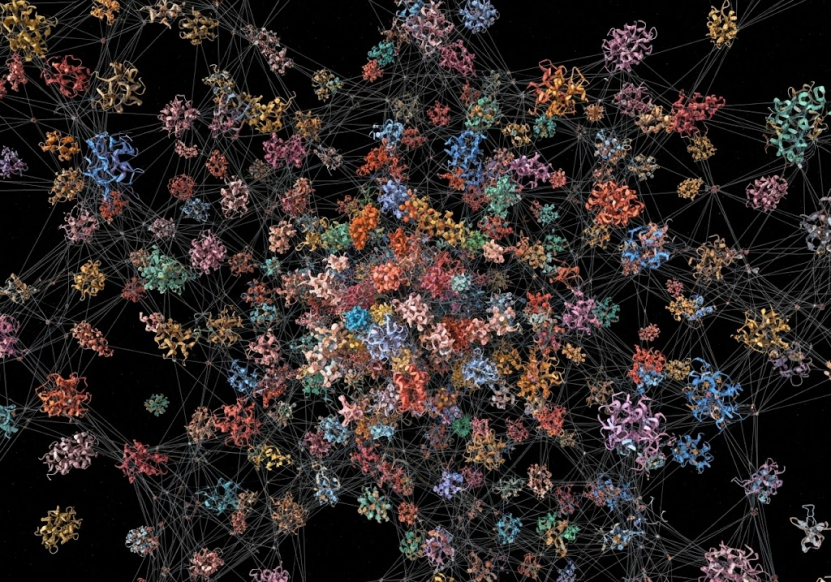
In the rapidly evolving world of structural biology, understanding the three-dimensional shape of proteins is fundamental to comprehending their functions and developing targeted therapeutics. Proteins are the workhorses of cells, carrying out a vast array of tasks, from catalyzing metabolic reactions to transporting molecules and fighting off invaders. Their intricate shapes dictate their interactions and activities. For decades, determining these structures primarily relied on experimental techniques like X-ray crystallography, Nuclear Magnetic Resonance (NMR) spectroscopy, and more recently, Cryo-Electron Microscopy (Cryo-EM).
These experimental methods have been invaluable, contributing a wealth of structures to public repositories like the Protein Data Bank (PDB). However, experimentally determining protein structures can be challenging, time-consuming, and sometimes impossible for certain proteins, particularly membrane proteins, flexible proteins, or large complexes.
More recently, significant strides have been made in computational methods for protein structure prediction. One of the most impactful developments in this area has been AlphaFold, an artificial intelligence system developed by DeepMind. AlphaFold has demonstrated remarkable accuracy in predicting protein structures from their amino acid sequences, often rivaling experimental resolution for many single proteins. This breakthrough has led to the creation of the AlphaFold Protein Structure Database, a publicly accessible resource containing predicted structures for millions of proteins from various organisms.
The AlphaFold Protein Structure Database has revolutionized structural biology by providing readily available predicted structures for a vast number of proteins that had not been experimentally determined. This allows researchers to gain structural insights into proteins of interest much faster than traditional methods. It has accelerated research in many areas, enabling in silico studies, guiding experimental design, and generating hypotheses about protein function.
However, it is crucial to recognize that computationally predicted structures, while powerful, are models. They represent the most likely stable conformation but may not always capture the full complexity of protein behavior. Proteins are dynamic molecules that can exist in multiple conformations, interact with various ligands or binding partners, and undergo post-translational modifications that significantly impact their structure and function. These aspects are often challenging for computational prediction alone to fully capture.
This is where advanced experimental structural biology methods become not only relevant but absolutely essential. While AlphaFold provides a valuable starting point, experimental techniques offer unique advantages for validating predictions, studying protein dynamics, determining structures of complexes, characterizing modified proteins, and working with challenging biological samples that are critical for real-world applications like drug and vaccine development.
Companies specializing in experimental structural biology services play a vital role in pushing the boundaries of what we can understand about protein structures and their interactions in a biological context. ShuimuBio, founded in 2017 at Tsinghua University, is one such platform, recognized as Asia's first commercial Cryo-Electron Microscopy structural analysis platform. With a core team of life and computational scientists, IT experts, and pharmaceutical industry professionals, ShuimuBio leverages deep research and technical expertise to provide advanced experimental solutions. They offer a "one-stop solution" that can take researchers from a gene sequence all the way to a high-precision 3D protein structure.
Let's explore some of the cutting-edge experimental services offered by ShuimuBio, as described in the sources, and how they complement and go beyond computational predictions available in databases like the AlphaFold Protein Structure Database:
1. Cryo-Electron Microscopy (Cryo-EM)
Cryo-EM has emerged as a dominant technique for resolving the high-resolution structures of large biological molecules and complexes, particularly those that are difficult to crystallize. ShuimuBio has established itself as the largest commercial Cryo-EM platform globally, equipped with 8 high-end 300 KV Cryo-EM microscopes (2 in Beijing, 6 in Hangzhou). Their services include:
· "One-stop" Single Particle Analysis (SPA) Solution: SPA is a Cryo-EM technique used to determine the high-resolution 3D structure of biological macromolecules like proteins and viruses from large numbers of 2D images. This method is especially powerful for studying difficult-to-crystallize proteins. ShuimuBio's SPA service covers a wide range of targets including antigen-antibody complexes, small molecules & targets, Protacs, membrane proteins (GPCRs, ion channels, transporters), VLPs, and peptides. A key advantage of Cryo-EM SPA is its ability to keep samples in a near-native state, capture multiple conformational states, require only small sample amounts, and determine the structure of heterogeneous protein complexes. ShuimuBio emphasizes its experienced team, advanced facilities, and pursuit of the highest resolution, having solved over 150 protein structures with their best resolution reaching 1.8 Å. This experimental detail is crucial for understanding the nuances of protein behavior that a static predicted structure might miss.
· Machine Time Service (24h): ShuimuBio provides 24/7 access to its state-of-the-art 300kV Cryo-EM facilities for data collection. This service is supported by an AI-driven platform using their independently developed SMART software, which helps optimize data collection efficiency. The availability of dedicated, high-quality machine time is essential for researchers needing to collect data for their specific projects, validating hypotheses or analyzing structures identified through prediction or preliminary experimental work.
· GraFuture™, GO & RGO: ShuimuBio has developed proprietary graphene grid consumables (GraFuture™) designed to tackle common challenges in Cryo-EM sample preparation, such as the air-water interface effect, preferred orientation, high sample concentration requirements, and background noise. These grids improve sample distribution and orientation, significantly enhancing the ability to reconstruct structures, especially for proteins with small molecular weights or low concentrations. This demonstrates ShuimuBio's innovation in overcoming experimental hurdles that prediction tools cannot address.
· Negative Stain & Negative Stain 2D: This is a cost-effective preliminary technique providing low-resolution 2D projection images of macromolecules and complexes. It's valuable for quickly assessing sample quality, particle uniformity, size, morphology, and oligomeric state before proceeding to Cryo-EM. Applications include examining plant/animal tissue sections and checking the uniformity of protein particles like AAV, exosomes, membrane proteins, viruses, and soluble proteins. While not providing atomic resolution, it's a crucial step in the experimental workflow, offering insights into sample properties not available from a purely computational model.
· Cryo-Characterization: This service uses ultra-low temperature techniques to observe and analyze structures in their natural state, with a focus on AAV, liposomes, LNPs, and VLPs. ShuimuBio's proprietary NanoSMART AI system automates the identification and reporting of nanoparticle characteristics from images, including size distribution, circularity, integrity, and fill status (full/empty for LNPs). This is vital for quality control and characterization of complex biological particles used in gene therapy and vaccine delivery, information that goes far beyond a simple protein structure prediction.
2. MicroED Solution
MicroED (Micro-Electron Diffraction) is a powerful technique for determining the high-resolution structure of small organic molecules, peptides, and proteins from microcrystals or nanocrystals. While the AlphaFold Protein Structure Database focuses primarily on protein structures, MicroED can provide atomic-level detail for small molecules and peptides that are often ligands or components in drug discovery. ShuimuBio excels in this area, using their original eTasED software to apply MicroED seamlessly on regular Cryo-EM systems. They have a high success rate (>80%) and have achieved resolutions as high as 0.6-1.0 Å, demonstrating their ability to solve challenging structures for small molecules, peptides, and small proteins. This technique is highly complementary, providing precise experimental structures for molecules that interact with the proteins found in structure databases.
3. "One-stop" Crystal Structure Resolution
Despite the rise of Cryo-EM and prediction tools, X-ray crystallography remains a powerful method, particularly for obtaining the highest resolution structures of well-ordered protein crystals. ShuimuBio offers a comprehensive "one-stop" service for crystal structure analysis, covering everything from protein expression and purification to crystal growth, data collection, and final structure resolution. This service is ideal for researchers needing atomic-level detail of soluble proteins, antigen-antibody complexes, or protein complexes with small molecule ligands. Resolving antibody-antigen complex structures via crystallography provides crucial insights into binding mechanisms and helps optimize antibody design, information that often requires experimental validation beyond computational models.
4. Protein Preparation and Analysis Services
High-quality protein samples are the bedrock of successful structural determination, whether by Cryo-EM, MicroED, or crystallography, and also for functional studies. ShuimuBio provides comprehensive protein services, including various expression systems (E. coli, mammalian, insect, cell-free) tailored to the specific protein requirements. They offer expertise in purifying challenging proteins, including membrane proteins like GPCRs, ion channels, and transporters. Rigorous quality control using techniques like SDS-PAGE, Western blot, mass spectrometry, thermal stability tests, and binding assays (SPR, BLI, ELISA) ensures the protein samples are suitable for downstream applications, including structural studies. ShuimuBio also maintains a list of "shelf proteins," including important drug targets like various GPCRs, enzymes, and viral proteins, available for research. The ability to reliably produce and characterize high-quality protein is a foundational service that complements any structural biology effort, including the validation or functional study of structures obtained from databases like the AlphaFold Protein Structure Database.
5. Antibody Discovery Services
Understanding the structure of antibodies and how they interact with antigens is critical for developing antibody-based therapeutics. ShuimuBio offers antibody discovery services, including antigen preparation, screening using phage display libraries, and antibody production, purification, and detailed characterization. Techniques like ELISA and SPR are used to validate antibody binding activity and determine affinity. Combining these services with structural analysis via Cryo-EM (for antibody-antigen complexes) provides a powerful platform for antibody drug discovery.
Why Experimental Structures Remain Indispensable
While predicted structures from resources like the AlphaFold Protein Structure Database offer immense value, experimental methods provided by platforms like ShuimuBio are vital for several reasons:
· Validation: Experimental structures provide independent validation for predicted models, confirming their accuracy and revealing discrepancies.
· Dynamics and Conformational States: Proteins are dynamic. Cryo-EM, for instance, can capture multiple conformational states or visualize changes upon ligand binding, which static predictions often miss.
· Complexes and Interactions: Predicting the structure of large complexes, especially those involving multiple proteins, nucleic acids, or lipids, or studying specific protein-ligand interactions, is more reliable with experimental data.
· Post-Translational Modifications: Modifications like phosphorylation or glycosylation are crucial for protein function but hard to predict accurately. Experimental methods can directly resolve their impact on structure.
· Drug and Vaccine Development: Designing drugs and vaccines requires precise structural information about how molecules interact with targets. Experimental methods provide the high-resolution, complex-specific data needed for rational design and optimization. ShuimuBio has significant experience supporting these applications, with numerous case studies published in top journals covering areas like ion channels, GPCRs, antigen-antibody complexes, and viral structures.
· Challenging Samples: Membrane proteins, flexible regions, or samples with high heterogeneity remain challenging for prediction tools but can often be tackled by advanced Cryo-EM techniques, especially when combined with innovations like ShuimuBio's GraFuture™ grids.
· Quality Control: For manufacturing processes, such as vaccine production or LNP delivery systems, experimental characterization using techniques like Cryo-Characterization is essential for quality control, ensuring the particles have the correct morphology, size distribution, and integrity.
ShuimuBio's Contribution
With their state-of-the-art facilities, experienced team of scientists, proprietary AI software (SMART, NanoSMART, eTasED), and dedication to achieving high resolution, ShuimuBio is at the forefront of experimental structural biology. They provide the critical experimental data needed to validate computational predictions, study complex biological systems in detail, and drive drug and vaccine discovery efforts forward. Their one-stop service model, covering protein preparation, structural analysis (Cryo-EM, MicroED, Crystallography), and functional assays, streamlines the research process. Their extensive project experience, having completed over 400 Cryo-EM and MicroED projects and solved over 150 protein structures, highlights their capability and reliability.
In conclusion, while the AlphaFold Protein Structure Database is an incredible resource that has democratized access to protein structure models, experimental structural biology methods are indispensable for gaining a complete understanding of protein function, dynamics, and interactions in complex biological contexts. Platforms like ShuimuBio provide the high-quality experimental data necessary to complement computational predictions, validate models, and accelerate research and development in areas like drug discovery and vaccine design.
To learn more about how cutting-edge experimental structural biology services can support your research or validate structures found in resources like the AlphaFold Protein Structure Database, visit https://shuimubio.com/. They offer free project evaluations and a comprehensive suite of services designed to meet your structural analysis needs.