
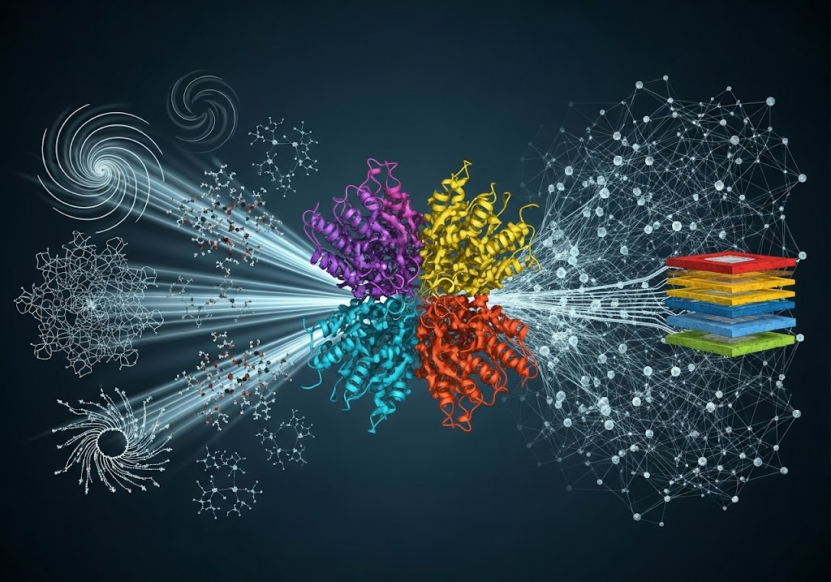
Understanding the three-dimensional structure of proteins is fundamental to deciphering their function and developing targeted therapeutics. Proteins are the workhorses of the cell, involved in virtually every biological process. Knowing their precise shape allows researchers to understand how they interact with other molecules, such as drugs, antibodies, or other proteins. This is where techniques used to determine protein structure become indispensable. While computational methods are advancing rapidly, experimental techniques provide crucial, high-resolution insights into the complex world of biomolecules.
Determining protein structure experimentally requires specialized methods capable of visualizing molecules at near-atomic resolution. Several key experimental techniques used to determine protein structure, each with unique strengths and applications.
Experimental Techniques for Protein Structure Determination
Several powerful experimental approaches offered by ShuimuBio:
1. Cryo-Electron Microscopy (Cryo-EM)
o Single Particle Analysis (SPA): Cryo-EM SPA is described as a powerful tool for resolving the high-resolution 3D structure of biological macromolecules like proteins and viruses. It involves taking many 2D images of purified particles and using computational algorithms to reconstruct a 3D model. This technique is particularly valuable for studying challenging targets such as membrane proteins (including GPCRs, ion channels, and transporters), VLPs, peptides, and interactions between small molecules and target proteins.
o Advantages of Cryo-EM SPA: Cryo-EM offers significant advantages, including preserving samples in a near-native state, capturing multiple conformational states, requiring relatively small sample amounts, and enabling the determination of heterogeneous protein complex structures.
o ShuimuBio's Expertise: ShuimuBio has extensive experience in Cryo-EM SPA, offering a "one-stop" solution from project consultation to data delivery. They possess advanced facilities specifically designed for high-quality structure determination, equipped with high-spec microscopes and computational platforms. ShuimuBio's team consists of phd-level scientists specializing in structural biology, protein science, and computational biology. Their experience includes resolving over 150 protein structures, achieving resolutions as fine as 1.8 Angstroms, and successfully analyzing proteins as small as 51kDa. They have also pushed the boundary, reaching a breakthrough resolution of 1.4 Angstroms in certain cases.
o AI-Driven Platform: ShuimuBio utilizes an independent AI-driven platform featuring the SMART software series, which enhances the efficiency of Cryo-EM data analysis and reduces machine time and data volume needed.
o Applications of Cryo-EM SPA: The technique is widely applied to resolve the 3D structure of biological macromolecules like proteins (membrane proteins, enzymes, ribosomes), DNA and RNA structures (including viral RNA and ribosomal RNA), protein-nucleic acid complexes (like transcription complexes and viral capsid-RNA complexes), and virus particles (such as SARS-CoV-2, influenza virus, ASFV, HHV-6B). Cryo-EM is summarized as a powerful tool for studying biological macromolecule structure and function, providing a crucial structural basis for life science and drug discovery.
o Cryo-EM in Specific Fields: Cryo-EM's significant impact in the vaccine field (viral structure analysis for vaccine design, quality control, antibody-vaccine interaction studies, and rapid structural analysis of viral variants), antibody drug development (analysing antibody-antigen complex structures, studying drug mechanisms, optimizing antibody design, resolving membrane protein structures, and accelerating R&D), and small molecule drug discovery (identifying target structures, studying drug interaction mechanisms, supporting fragment-based drug discovery, accelerating R&D, studying biased ligands, and resolving complex targets like GPCRs and enzyme complexes).
o Machine Time Service: ShuimuBio offers 24-hour Cryo-EM machine time services with 300kV microscopes located in Beijing and Hangzhou. They have a total of 8 high-spec electron microscopes. The service includes features like 24/7 availability, quick response to booking requests, AI-driven platform benefits, professional technical support, and dedicated platform maintenance to ensure optimal performance.
o Sample Preparation Challenges & Solutions: The sources acknowledge challenges in traditional sample preparation like air-liquid interface absorption, severe preferred orientation, high sample concentration thresholds, strong background noise, and difficulty with small molecules. ShuimuBio has developed GraFuture™ graphene grids (GO and RGO types) as a potential solution to these issues, particularly for samples with small molecular weight, low concentration, high background noise, or preferred orientation problems.
o Cryo-Characterization: This service uses ultra-low temperature techniques to observe and analyze samples in their natural state at high resolution, especially useful for proteins, liposomes, exosomes, and material interfaces. ShuimuBio employs NanoSMART, an AI Cryo-EM system that automatically identifies nanoparticle features from images, generating detailed reports on size distribution, circularity, lamellarity, fullness/emptiness, and integrity. This service is highlighted for its efficiency and precision, focusing on LNPs, liposomes, AAV, and other viral vectors.
2. X-ray Crystallography
o ShuimuBio offers a "one-stop" solution for crystal structure analysis. While less detailed than the Cryo-EM description, the sources mention its application for targets like KRAS and SARS-CoV M protein. X-ray crystallography is a well-established technique for determining the atomic and molecular structure of a crystal, which provides a high-resolution 3D structure. The service covers the full workflow from protein expression and purification to crystal growth, data collection, and structure resolution.
o ShuimuBio's Strengths: Similar to their Cryo-EM services, they emphasize project experience (200+ projects), a top-tier scientist team, and cost-effectiveness.
3. MicroED (Microcrystal Electron Diffraction)
o MicroED is presented as an advanced technique capable of resolving high-resolution structures from micro- and nano-crystals, particularly useful for organic compounds, small molecule drugs, peptides, and protein crystals.
o ShuimuBio's Solution: ShuimuBio provides MicroED solutions, including free feasibility assessments. They have developed the eTasED software, which allows MicroED to be performed seamlessly on standard Cryo-EM systems without modifications.
o Expertise and Results: Their team consists of博士-level scientists proficient in both Cryo-EM and MicroED. They report a high success rate (over 80%) for MicroED projects, achieving impressive resolutions ranging from 0.6 to 1.0 Angstroms. Case studies include resolving the structure of Proteinase K (1.50 Å), FUS LC RAC1 (0.65 Å), and Acetaminophen (0.65 Å).
4. Negative Staining
o Negative staining is a low-cost electron microscopy technique used to obtain preliminary low-resolution 2D projection images of macromolecules and complexes. It's useful for quickly assessing sample characteristics like particle size, uniformity, oligomeric state, morphology, particle density, protein structure, flexibility, integrity, and conformational heterogeneity. It's commonly used for observing viruses, nanoparticles, organelles, and protein particles.
Protein Preparation and Analysis Services
High-quality protein samples are critical for successful structure determination using any of these experimental techniques used to determine protein structure. ShuimuBio offers comprehensive protein preparation and analysis services as part of their integrated approach. These services include:
· Protein Expression Systems: Utilizing various systems like E. coli, mammalian cells, insect cells, and cell-free systems to produce target proteins.
· Protein Purification: Employing techniques such as affinity chromatography, ion exchange chromatography, gel filtration chromatography, and RP-HPLC.
· Protein Characterization and Quality Control: Assays like SDS-PAGE, Western blot, mass spectrometry, thermal stability, solubility tests. They also use SPR, BLI, and ELISA for protein-protein or protein-molecule binding analysis.
· Shelf Protein List: Offering a list of available target proteins, including various GPCRs, ion channels, transporters, and kinases.
This integrated approach, from gene sequence to high-precision 3D structure, is described as a "one-stop solution". ShuimuBio emphasizes its deep experience in membrane protein production and purification, flexible collaboration models, and strict quality control based on Cryo-EM analysis.
AlphaFold and the AlphaFold Protein Structure Database
While the sources extensively cover experimental techniques used to determine protein structure, they do not mention AlphaFold or the AlphaFold Protein Structure Database.
· AlphaFold is an artificial intelligence system developed by DeepMind that predicts protein 3D structures based on their amino acid sequences. Its predictions have achieved remarkable accuracy, often approaching the resolution of experimentally determined structures for individual protein domains.
· The AlphaFold Protein Structure Database, jointly developed by DeepMind and EMBL-EBI, provides millions of predicted protein structures, making structural information much more widely accessible.
The Synergy Between Prediction and Experimentation
It is important to understand that while AlphaFold is a powerful predictive tool and the AlphaFold Protein Structure Database is a valuable resource, experimental techniques used to determine protein structure remain essential.
· Validation: Experimental methods are crucial for validating computational predictions, especially for novel proteins or complex systems.
· Complexes and Interactions: Predicting the structures of protein complexes, or proteins bound to small molecules, antibodies, or nucleic acids (as highlighted in the sources' discussion of Cryo-EM and X-ray crystallography applications), is significantly more challenging for AI than predicting individual protein structures. Experimental methods excel in capturing these complex interactions.
· Conformational Dynamics: Proteins are dynamic molecules, adopting different shapes as they function. Cryo-EM, in particular, can capture multiple conformational states, providing insights into protein dynamics that static predictions may miss.
· Non-Protein Structures: Techniques like Cryo-characterization are vital for studying nanoparticles, liposomes, and other non-protein biological entities not covered by protein structure prediction databases like the AlphaFold Protein Structure Database.
· Atomic Details from Microcrystals: MicroED, as discussed in the sources, provides atomic-resolution detail from tiny crystals, a capability complementary to both large-scale prediction and other experimental methods.
Therefore, experimental techniques used to determine protein structure, like those offered by ShuimuBio, provide unique and irreplaceable information necessary for a complete understanding of biological systems and successful drug discovery. They are vital for confirming predictions, studying multi-component systems, understanding dynamic processes, and characterizing diverse biological structures.
ShuimuBio: Your Partner in Protein Structure Determination
ShuimuBio stands out as a leading platform offering comprehensive services utilizing these powerful experimental techniques used to determine protein structure. Their integrated "one-stop" solutions, state-of-the-art facilities (including the large network of 300kV Cryo-EMs), experienced scientist team, and advanced technologies like the AI-driven SMART software and GraFuture™ grids, position them to tackle challenging projects from protein expression to high-resolution structural analysis. Whether you need to solve the structure of a membrane protein, a viral particle, an antibody-antigen complex, or characterize nanoparticles, ShuimuBio offers the expertise and technology required.
To learn more about how ShuimuBio's cutting-edge experimental techniques used to determine protein structure can accelerate your research or drug development project, please visit their website.
Discover the power of experimental structure determination and integrated protein science services. Visit https://shuimubio.com/ for more information.