
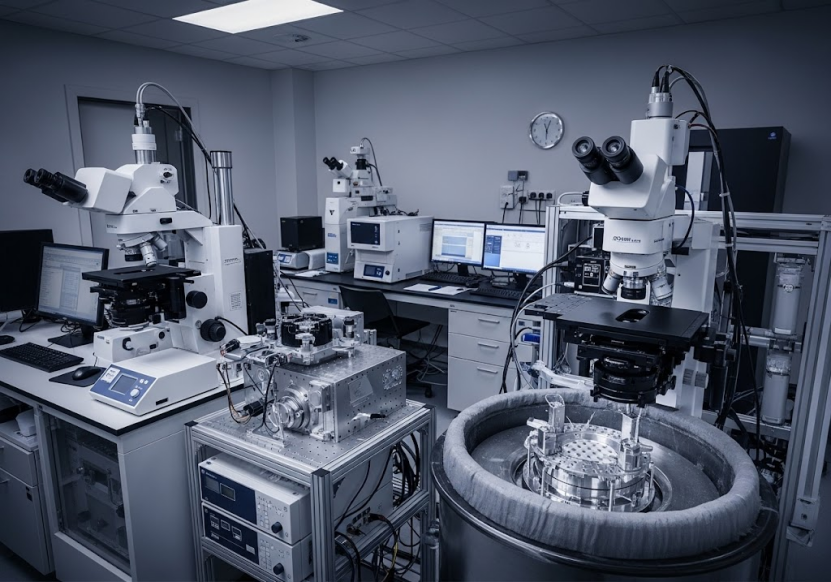
Understanding the intricate three-dimensional structures of biological macromolecules is fundamental to advancing life science research and accelerating drug discovery. Techniques capable of providing high-resolution structural insights are invaluable tools in this endeavor. Cryo-Electron Microscopy (Cryo-EM), particularly Single Particle Analysis (SPA), and Microcrystal Electron Diffraction (MicroED) stand out as powerful methods revolutionizing our ability to visualize biological molecules and their complexes in unprecedented detail.
These technologies enable researchers to determine the precise architecture of proteins, nucleic acids, viruses, and their interactions, providing critical information for understanding function, identifying drug targets, and designing novel therapeutics.
For researchers seeking cutting-edge structural biology services, discovering platforms that integrate these advanced technologies with comprehensive support services is key to success. To explore how these techniques can benefit your research, visit https://shuimubio.com/.
The Transformative Power of Cryo-EM in Structural Biology
Cryo-EM, particularly the Single Particle Analysis (SPA) approach, is a powerful technique for resolving the high-resolution three-dimensional structure of biological macromolecules such as proteins and viruses. SPA involves capturing numerous two-dimensional images of purified macromolecular particles and employing computational algorithms to process and reconstruct these images into a high-resolution 3D structural model.
One of the significant advantages of Cryo-EM SPA is its ability to preserve samples in a near-native state, offering a view of their biological conformation. This is especially crucial for flexible molecules or those that are difficult to crystallize. Cryo-EM can also capture various conformational states of a molecule or complex, providing dynamic insights. It requires relatively small sample quantities compared to some other structural methods and is highly effective at determining the structure of heterogeneous protein complexes.
The applications of Cryo-EM SPA are vast, covering a wide range of biological entities and research areas. It can be used to resolve the 3D structures of various proteins, including membrane proteins like GPCRs (G Protein-Coupled Receptors), ion channels, and transporters, as well as enzymes and ribosomes. Cryo-EM also provides structural information on DNA and RNA, including double-helix structures and their interactions with other molecules, as well as viral RNA and ribosomal RNA. Crucially, it is a go-to method for studying protein-nucleic acid complexes, such as transcription complexes involving RNA polymerase and DNA templates, and complexes of viral capsid proteins with viral RNA. Furthermore, it is widely applied to analyze viral particles, including SARS-CoV-2, influenza virus, African swine fever virus (ASFV), human herpesvirus 6B (HHV-6B), and rabies virus glycoprotein (VSV-GP).
The ability of Cryo-EM to resolve the structures of protein complexes and other macromolecular assemblies makes it invaluable for understanding biological function at a molecular level.
Cryo-EM Applications in Drug Discovery and Vaccine Development
Cryo-EM plays a critical role across the drug discovery pipeline, particularly in the context of antibody and small molecule therapeutics, and in vaccine development.
In Vaccine Development: Cryo-EM provides near-atomic resolution structures of viruses, aiding in understanding invasion mechanisms and informing vaccine design. For instance, Cryo-EM was used to resolve the full-length structure of the SARS-CoV-2 receptor ACE2 and its complex with the SARS-CoV-2 Spike protein, providing key insights for understanding viral entry and designing vaccines. The technology has also supported novel strategies for live attenuated influenza vaccines and studies on how neutralizing antibodies block measles virus infection.
Beyond fundamental research, Cryo-EM is used for vaccine quality control, assessing particle morphology, size, integrity, and aggregation at different production stages to optimize processes and ensure quality. It is also vital for studying antibody-vaccine antigen binding mechanisms to optimize immunogenicity. Furthermore, the rapid structural determination capability of Cryo-EM allows scientists to quickly analyze the structures of new viral variants, facilitating timely adjustments to vaccine design strategies. This capability for detailed particle characterization contributes significantly to ensuring the quality and efficacy of complex vaccine formulations.
In Antibody Drug Discovery: Cryo-EM is essential for resolving the high-resolution 3D structures of antibody-antigen complexes. This structural information is crucial for understanding antibody recognition mechanisms and binding sites, which is fundamental for designing more effective antibody drugs. It also aids in studying antibody drug mechanisms of action, such as how antibodies bind to targets or activate/inhibit signaling pathways. Analyzing complex structures, like that of a broad-spectrum neutralizing biparatopic antibody targeting SARS-CoV-2 variants, helps reveal the molecular basis of their activity.
Cryo-EM enables the structural analysis of existing antibody drugs to identify potential optimization points. By revealing dynamic binding processes and conformational changes, it guides the design of antibodies with higher affinity and specificity and helps analyze conformational epitopes for antibody engineering. Importantly, Cryo-EM can resolve the high-resolution structures of challenging membrane protein targets, such as GPCRs, which are common targets in antibody drug development, revealing mechanisms of ligand binding and receptor activation. The speed and high resolution of Cryo-EM also help accelerate the antibody drug development process.
In Small Molecule Drug Discovery: Cryo-EM is highly valuable in small molecule drug discovery, primarily for resolving the high-resolution structures of drug targets like membrane proteins and enzymes. By resolving the structure of GPCRs, for example, researchers can observe details of how small molecule ligands bind, providing a structural basis for designing highly selective and potent small molecule drugs.
The technique is used to study the interaction mechanisms between small molecule drugs and their targets. Analyzing complex structures of GPCRs bound to agonists or antagonists helps understand how drugs activate or inhibit receptors and modulate signaling pathways, information critical for optimizing drug design. Cryo-EM also shows potential in fragment-based drug discovery (FBDD) by revealing interaction details between small molecule fragments and protein targets, aiding in screening and optimizing potential drug candidates.
Cryo-EM accelerates the drug discovery process by providing detailed structural information on targets like GPCRs quickly, allowing for rapid optimization of drug design. It offers unique advantages in studying biased ligands that selectively modulate specific downstream signaling pathways mediated by GPCRs. By resolving complex structures of these ligands bound to GPCRs, it provides insights for developing novel small molecule drugs. The technique's ability to resolve structures of complex targets, including membrane proteins and enzyme complexes, is significant for small molecule drug development.
These examples highlight how Cryo-EM facilitates in-depth analysis and structural determination of protein complexes and their interactions with other molecules, which is a key aspect of what could be considered "protein complex detection" in a structural biology context – confirming complex formation by resolving its detailed architecture and how components interact.
ShuimuBio's Advanced Cryo-EM Platform
A leader in commercial Cryo-EM services, ShuimuBio was founded in 2017. The company operates one of the largest commercial Cryo-EM platforms globally, featuring 8 x 300 KV Cryo-EM microscopes strategically located in Beijing and Hangzhou. Leveraging deep expertise in structural biology and computation, ShuimuBio has established advanced, reliable experimental and data analysis workflows. The platform is supported by experienced electron microscopy technical engineers for daily operation and maintenance, ensuring optimal performance for data collection.
ShuimuBio offers a comprehensive "one-stop" SPA solution covering various sample types including antibody-antigen complexes, small molecules and targets, PROTACs, membrane proteins (GPCRs, ion channels, transporters), VLPs, and peptides. Their service workflow includes project consultation, evaluation, plan determination, contract, protein expression/purification, negative stain characterization, cryo sample preparation/data collection, 2D particle picking, 3D reconstruction, model refinement, and data delivery.
Key advantages of the ShuimuBio Cryo-EM platform include:
· Advanced Facilities: Top-tier microscopes with advanced components for high-quality imaging.
· Expert Team: PhD-level scientists specializing in structural biology, protein science, and computational biology.
· Extensive Experience: Over 400 Cryo-EM project experiences, resolving over 150 protein structures with best resolutions reaching 1.8 Å. They have successfully resolved structures as small as 51 kDa and achieved breakthrough resolutions of 1.4 Å.
· AI-Driven Platform: Independent development of the SMART software series using AI to enhance data analysis efficiency and accuracy, reducing machine time and required data volume.
· High-Quality Sample Preparation: In-house protein expression and purification platform with full workflows from molecular cloning to characterization, addressing challenging protein preparations and reducing transportation-related sample issues. Quality control is based on Cryo-EM analysis and characterization.
ShuimuBio also provides 24-hour machine time services on their 300kV instruments. This service supports efficient data collection for structural analysis. They offer 24/7 service with response within 24 hours for booking requests and provide expedited channels. The platform includes necessary auxiliary equipment like Vitrobot and surface plasma processors. Sample requirements for machine time include advance delivery of frozen samples and providing buffer information.
Enhancing Sample Preparation and Characterization
Addressing challenges in sample preparation is critical for successful Cryo-EM and MicroED. ShuimuBio has developed proprietary solutions like GraFuture™ graphene grids to overcome issues such as air-liquid interface absorption, severe preferred orientation, high sample concentration thresholds, strong background noise, and difficulty reconstructing small molecules. These grids, available as GraFuture™ GO (graphene oxide) and RGO (reduced graphene oxide), offer a potential solution for preferred orientation and are suitable for samples with low molecular weight, low concentration, high background noise, and interface damage.
For preliminary assessment and characterization, ShuimuBio offers Negative Stain and Negative Stain 2D services. Negative staining is an EM technique that stains the background to reveal the structure and morphology of unstained samples. Negative Stain 2D specifically analyzes samples in a two-dimensional projection. This low-cost method quickly provides information on particle size, homogeneity, oligomeric state, morphology, concentration, structure, flexibility, integrity, and conformational heterogeneity. It is useful for observing viruses, nanoparticles, organelles, and protein complexes. For protein complex detection and characterization in this context, negative stain is valuable for assessing the uniformity and intactness of assembled particles like AAV, exosomes, membrane proteins, viruses, and soluble proteins. Sample requirements include high protein purity (>95%) and homogeneity (>90%).
Cryo-Characterization is another vital service, using ultra-low temperature techniques to maintain samples in a natural state for high-resolution observation and analysis. This is particularly advantageous for observing the structures of proteins, lipids, exosomes, VLPs, and LNPs. ShuimuBio utilizes NanoSMART, an AI-driven Cryo-EM system, which automatically identifies nanoparticle features from images, providing detailed reports with one-click operation. This service is crucial for characterizing the size distribution, circularity, lamellarity, fill/empty ratio, and integrity of LNPs, liposomes, AAV, and other viral vectors. This service also contributes to the characterization and analysis of complex biological particles.
Precision with MicroED for Crystalline Samples
Microcrystal Electron Diffraction (MicroED) is a cutting-edge technique capable of accurately resolving high-resolution structures from micro- and nanocrystals, particularly effective for organic compounds, peptides, and crystalline proteins. ShuimuBio excels in using MicroED to provide precise structural insights into small molecule samples, peptides, and protein crystals.
MicroED offers a unique advantage for samples that form crystals but are too small or challenging for traditional X-ray crystallography. ShuimuBio provides free assessment services for MicroED projects, including feasibility analysis and risk assessment, drawing on their extensive experience.
A key innovation from ShuimuBio is the eTasED software, which seamlessly integrates MicroED technology with conventional Cryo-EM systems without requiring hardware modifications, significantly boosting efficiency and accuracy. ShuimuBio's MicroED team is composed of expert scientists proficient in both Cryo-EM and MicroED techniques. They boast a high success rate, having delivered over 80% of their MicroED projects, achieving resolutions between 0.6 and 1.0 Å.
Sample requirements for MicroED include stable crystals of small molecules, peptides, or proteins, provided in powder or lump form, with a minimum quantity visible to the naked eye (>= 5mg if possible). MicroED has been successfully applied to determine the structures of proteins (like Proteinase K), peptides (like FUS LC RAC1 and Acetaminophen), and small molecules. This technique is particularly valuable for determining the structures of small, crystalline protein complexes.
Integrated Services for Comprehensive Structure Determination
ShuimuBio's "one-stop" solution approach is designed to streamline the entire structural determination process, from gene sequence to high-precision 3D structure. This integrated workflow addresses critical challenges, such as the impact of sample transportation on experiments, by offering in-house protein expression and purification services.
The Protein Preparation and Analysis service platform provides expertise in various expression systems (E. coli, mammalian cells, insect cells, cell-free systems). They offer purification processes using affinity chromatography, ion exchange, gel filtration, and RP-HPLC. Protein quality control includes SDS-PAGE, Western blot, mass spectrometry, and thermal stability/solubility tests. The platform also offers protein-protein or protein-molecule binding analysis using techniques like SPR, BLI, and ELISA. These analytical methods are crucial for confirming interactions and characterizing the binding affinity of protein complexes with other molecules.
Protein Complex Detection and Interaction Analysis Services: While the term "detection" can mean many things, in structural biology and drug discovery, it often involves characterizing the components, confirming interactions, and determining the structure of a complex. ShuimuBio's services directly support this through:
· Structural Resolution (Cryo-EM SPA, MicroED, Crystal Structure): Resolving the atomic architecture of protein complexes.
· Interaction Analysis (SPR, BLI, ELISA): Quantifying the binding affinity and kinetics between components of a complex or between a complex and a ligand. This confirms the existence and strength of interactions within or with complexes.
· Particle Characterization (Negative Stain, Cryo-Characterization): Assessing the morphology, size, homogeneity, and integrity of complex particles like viruses, VLPs, LNPs, or purified protein assemblies.
The protein preparation platform has deep experience in areas critical for structural studies, such as membrane proteins (GPCRs, ion channels, transporters). They offer flexible collaboration models and rigorous quality control based on Cryo-EM analysis.
Beyond Cryo-EM and MicroED, ShuimuBio also provides "one-stop" Crystal Structure Analysis services, particularly useful for antibody-antigen complexes, small molecule drugs, and peptides that readily crystallize. This service covers the full workflow from protein preparation to crystal growth, data collection, and structure resolution.
Furthermore, their Antibody Discovery service includes screening for antibodies that specifically bind to antigens. This involves material preparation (antigen prep), antibody generation (using phage display libraries), and antibody verification and characterization, including specificity, cell binding, affinity determination (using SPR/Biacore), and epitope identification. These services are directly aimed at identifying and characterizing specific protein complexes formed between antibodies and antigens.
Case Studies and Expertise
ShuimuBio's expertise is demonstrated by their success in supporting research published in top international journals. Their platform has been instrumental in resolving the structures of various biological samples, including ion channels, GPCRs, antibody-antigen complexes, and spliceosomes. Specific examples include resolving the Cryo-EM structures of human NMDA receptors bound to small molecules and the histamine H1 receptor/Gq complex. They have successfully resolved the structures of SARS-CoV-2 Spike protein complexes and various antibody complexes. The platform has contributed to studies on GPCR signaling, ion channel gating, and the structure of various protein complexes involved in cellular processes.
Their protein preparation and analysis services support the generation of challenging targets like membrane proteins and provide a list of readily available "shelf proteins" including GPCRs, ion channels, transporters, and kinases. This comprehensive capability underscores their role in enabling in-depth studies of protein complexes and their functions.
Conclusion
High-resolution structural biology techniques like Cryo-EM SPA and MicroED are transforming our understanding of biological systems and accelerating the development of new therapies. Their ability to resolve the structures of complex biological molecules, including protein complexes, and analyze their interactions is paramount in modern research and drug discovery. Supported by advanced protein preparation, characterization (including negative stain and cryo-characterization), and interaction analysis services (like SPR, BLI, ELISA), these technologies provide a powerful suite of tools for researchers.
Whether you require detailed structural information on a protein complex, the binding mechanism of an antibody, the interaction of a small molecule with its target, or characterization of complex particles, ShuimuBio offers the expertise and platform to meet your needs. Their integrated "one-stop" solutions, cutting-edge facilities, experienced team, and innovative technologies like GraFuture grids and eTasED software position them as a key partner in structural biology research.
To learn more about how Cryo-EM, MicroED, and related services can support your project, and for detailed information on how to initiate a collaboration, please visit https://shuimubio.com/.