
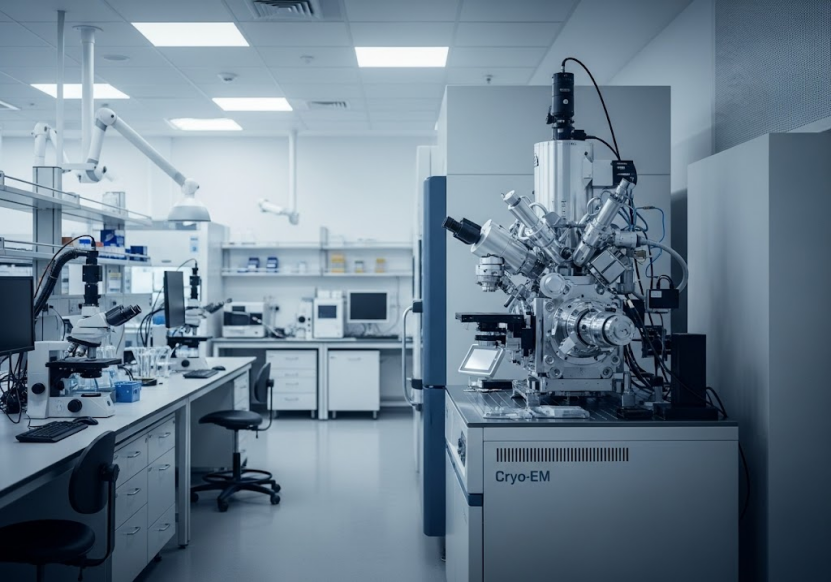
Cryo-electron microscopy (cryo-EM) has revolutionized structural biology, providing unprecedented insights into the intricate architectures of biological molecules. This powerful technology allows scientists to determine the high-resolution, three-dimensional structures of macromolecules, complexes, and even viruses in a near-native state. The diverse cryo electron microscopy application areas span fundamental research to crucial drug discovery and development efforts.
At its core, a primary cryo electron microscopy application is Single Particle Analysis (SPA). SPA is a technique that combines cryo-EM imaging with sophisticated computer algorithms to reconstruct high-resolution 3D models from numerous 2D images of purified biological macromolecules. This is particularly valuable for molecules that are difficult to crystallize, such as large protein complexes, membrane proteins, and flexible structures. SPA can reveal the structures of proteins, including membrane proteins like GPCRs, ion channels, and transporters, as well as DNA and RNA structures, protein-nucleic acid complexes, and various viral particles. Advantages of cryo-EM SPA include its ability to preserve samples in a near-native state, capture multiple conformational states, require only small amounts of sample, and determine the structure of heterogeneous protein complexes.
Leading platforms in the field, such as ShuimuBio, founded in 2017, have established extensive capabilities in cryo-EM. ShuimuBio operates what is described as the largest commercial cryo-EM platform globally, equipped with 300KV cryo-electron microscopes in Beijing and Hangzhou. They have accumulated experience from over 400 cryo-EM projects, resolving structures for more than 150 proteins with resolutions reaching as high as 1.8 Å. Their proprietary AI algorithms and specialized consumables, like graphene grids (GraFuture™), are designed to enhance structure解析 efficiency and precision. GraFuture™ specifically addresses challenges in sample preparation, such as small molecular weight, low concentration, high background noise, air-liquid interface damage, and preferred orientation.
One critical cryo electron microscopy application lies within the realm of drug discovery.
· Antibody Drug Development: Cryo-EM is vital in designing and optimizing antibody-based therapeutics. It enables the解析 of high-resolution 3D structures of antibody-antigen complexes, providing a deep understanding of antibody recognition mechanisms and binding sites. This structural information is crucial for designing more effective antibody drugs and studying their mechanisms of action, including how antibodies interact with targets and influence signaling pathways. Cryo-EM is also essential for resolving structures of complex targets like membrane proteins (e.g., GPCRs) that are frequent targets for antibody drugs. The technology accelerates the R&D process by quickly providing detailed structural data to guide antibody design and optimization.
· Small Molecule Drug Development: Cryo-EM significantly impacts small molecule drug research. It allows for the high-resolution structure解析 of drug targets, such as membrane proteins and enzymes, helping researchers understand the sites where small molecule drugs interact. By resolving the complex structures of targets bound to small molecule ligands, agonists, or antagonists, scientists can gain insights into drug mechanisms and optimize drug design for improved selectivity and efficacy. Cryo electron microscopy application extends to Fragment-Based Drug Discovery (FBDD), revealing interaction details between small molecule fragments and protein targets to aid in screening and optimization. It also assists in studying biased ligands and resolving structures of complex targets relevant to small molecule drug development.
The vaccine field also heavily benefits from cryo electron microscopy application.
· Viral Structure Analysis: Cryo-EM determines the high-resolution structures of viruses, providing crucial insights into their invasion mechanisms, which directly informs vaccine design. Examples include the structures of SARS-CoV-2 components like the S protein bound to the human ACE2 receptor, aiding in understanding virus entry and developing vaccines.
· Vaccine Quality Control: Cryo-EM is used to assess critical quality attributes (CQA) of vaccines at different production stages, such as particle morphology, size, integrity, and aggregation level. This helps optimize manufacturing processes and ensure product quality. It allows direct visualization of vaccine particle integrity and accurate detection of aggregation. ShuimuBio offers cryo-characterization services specifically for nanoparticle analysis, including AAV, lipid nanoparticles (LNP), and VLP, using their AI system NanoSMART for automated recognition and analysis.
· Antibody-Vaccine Interaction: The technology studies how antibodies bind to vaccine antigens, assisting in optimizing vaccine immunogenicity.
· Responding to Viral Variation: Cryo-EM can rapidly resolve the structures of new viral variants, enabling scientists to quickly adapt vaccine design strategies. This was particularly important during the COVID-19 pandemic, where cryo-EM helped analyze variant structures to support vaccine development.
Beyond SPA and its applications in drug and vaccine development, cryo-EM encompasses other specialized techniques:
· MicroED (Microcrystal Electron Diffraction): This technique is employed to resolve high-resolution structures from micro- and nanocrystals, which is particularly useful for small organic compounds, peptides, and protein crystals. ShuimuBio offers MicroED services, having successfully delivered over 80% of projects with resolutions ranging from 0.6 to 1.0 Å. They utilize their eTasED software, which integrates MicroED seamlessly with standard cryo-EM systems.
· Negative Stain: Often used as an initial assessment tool, negative stain provides low-resolution 2D projection images of macromolecules or complexes. It's a cost-effective method to quickly obtain preliminary information about sample characteristics such as particle size, homogeneity, morphology, and oligomeric state. This serves as a valuable preliminary step before pursuing high-resolution cryo-EM studies. It is also applied for visualizing tissue sections and checking particle homogeneity for various samples like AAV, exosomes, and viruses.
A comprehensive structural biology platform requires capabilities beyond just electron microscopy. ShuimuBio provides a "one-stop" solution that integrates protein expression, purification, and analysis services alongside cryo-EM structure解析. This includes various expression systems (E. coli, mammalian, insect, cell-free), purification techniques, and protein characterization methods like SDS-PAGE, Mass Spectrometry, SPR, BLI, and ELISA. They also offer crystal structure解析 services using X-ray crystallography for various molecules and antibody discovery services. This integrated approach aims to streamline the process from gene sequence to high-precision 3D protein structure. Their experience extends to a wide range of protein targets, including challenging membrane proteins, and they maintain a list of available shelf proteins. Strict quality control, often utilizing cryo-EM analysis itself, is applied to ensure sample suitability for structural studies.
The impact of cryo electron microscopy application is clearly demonstrated by the numerous high-impact research outcomes published by scientists utilizing platforms like ShuimuBio. These studies cover diverse biological systems and contribute significantly to our understanding of health and disease, paving the way for new therapeutic interventions.
In summary, cryo electron microscopy application has become an indispensable tool in modern life science research, significantly advancing our ability to understand biological processes at a molecular level and accelerating the development of novel drugs and vaccines.
To learn more about these advanced services and how they can support your research, visit https://shuimubio.com/ for more info.